

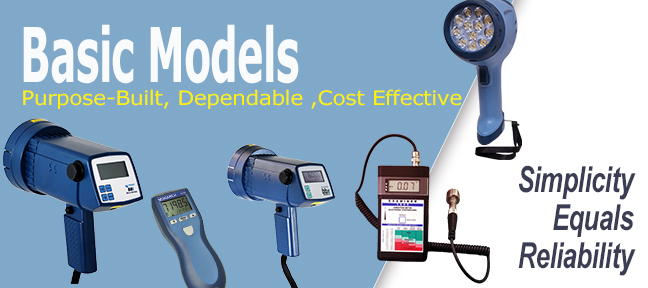
8 Benefits of Basic Industrial Instruments and Measurement Devices
In industrial measurement, “basic” isn’t a limitation, it’s a design philosophy. “Basic” industrial instruments are purpose-built, dependable and proven to work in the field. They always deliver accurate results that engineers, technicians and quality managers need the most.
Basic measuring tools offer performance, longevity and value that overly complex smart devices simply can’t match. Whether you’re managing a manufacturing line, maintaining critical equipment, or running quality control checks, you want well-built, reliable instruments you can trust every time.
When Are Basic Industrial Instruments the Right Choice?
Basic measurement devices are the preferred solution when:
- Measurement accuracy and long-term dependability matter more than wireless connectivity
- Multiple operators across multiple shifts need intuitive, low-training tools
- Regulated industries or validated processes require consistent, stable instrument performance
- Cybersecurity risk and IT complexity need to be minimized
- Budget-conscious teams need proven tools with a low total cost of ownership
Read on to explore the 8 benefits of basic industrial instruments, and why Monarch Instrument has built its product lines around these enduring principles.
1. Proven Reliability for Critical Measurement Applications
Basic industrial instruments are engineered around a singular focus: precise, repeatable measurement. By eliminating unnecessary electronic complexity and software dependencies, these devices reduce the number of potential failure points, resulting in consistent performance you can count on shift after shift, year after year.
For applications where measurement error has real consequences such as RPM verification, force measurement, torque analysis, or temperature monitoring, proven reliability is a must.
Key benefits:
- Trusted performance in mission-critical environments
- Consistent, repeatable measurement results
- Fewer software, firmware, or connectivity-related failures
2. Ease of Operation Across Operators and Shifts
Complex instruments demand training. Basic industrial instruments don’t. With intuitive interfaces and straightforward operation, basic measurement tools are immediately accessible to any qualified operator, reducing setup time, minimizing user error, and keeping production moving.
This is especially valuable in high-turnover environments or multi-shift operations where consistency of use is as important as consistency of measurement.
Key benefits:
- Faster time-to-measurement in the field or on the floor
- Minimal operator training required
- Reduced risk of setup errors and misreadings
3. Long-Term Stability and Product Longevity
One of the most underappreciated benefits of basic industrial instruments is their longevity. Without dependence on firmware update cycles, cloud platforms, or proprietary software ecosystems, a basic measurement device’s performance remains stable and predictable over its entire service life.
This matters enormously in regulated industries such as pharmaceutical manufacturing, aerospace, food processing where instrument validation is expensive and disruptions to measurement systems carry compliance risk. Basic instruments don’t become obsolete. They become trusted.
Key benefits:
- Ideal for validated processes and regulated industry applications
- No firmware dependencies or software end-of-life concerns
- Consistent performance across long deployment periods
4. Lower Total Cost of Ownership
When evaluating industrial measurement tools, purchase price is only part of the equation. Basic instruments deliver a significantly lower total cost of ownership (TCO) over their service life, driven by reduced maintenance needs, fewer replacement parts, and minimal IT infrastructure requirements.
For cost-conscious operations managing large fleets of measurement tools, the economic benefits of basic industrial instruments adds up fast. Especially when you factor in reduced downtime and the elimination of software licensing costs.
Key benefits:
- Lower upfront cost and reduced maintenance expenses
- Fewer replacement parts and service interventions
- No software licensing, subscription, or support fees
5. Consistent Performance in Industrial Environments
Many industrial measurement applications involve environments that are inhospitable to sensitive electronics: high vibration, extreme temperatures, dust, moisture, and electromagnetic interference. Basic instruments are frequently better suited to these conditions, and as standalone devices, they don’t depend on network access, Wi-Fi signal strength, or Bluetooth pairing to function.
Whether measuring RPM on heavy rotating machinery, checking torque in a foundry, or monitoring temperature in a chemical plant, basic instruments perform where it counts.
Key benefits:
- Standalone operation means no single points of network failure
- Designed for durability in demanding industrial environments
- No reliance on network connectivity or wireless infrastructure
6. Uncompromising Focus on Measurement Accuracy
Basic instruments exist for one purpose: to provide accurate, readable measurements quickly. Without the distraction of data logging dashboards, Bluetooth configuration menus, or app integrations, operators get a clear, reliable reading exactly when they need it.
For spot checks, incoming inspection, preventive maintenance, and compliance verification, that clarity is invaluable.
Key benefits:
- Easy-to-read displays with clear measurement output
- Accuracy optimized for core measurement functions
- Immediate results without navigating software interfaces
7. Reduced IT Complexity and Cybersecurity Risk
Every connected device on an industrial network is a potential cybersecurity vulnerability. Basic instruments have limited, or no connectivity, which makes them an attractive choice for security-conscious manufacturers and facilities subject to strict IT governance policies.
With no wireless protocols to patch, no data transmissions to encrypt, and no user accounts to manage, basic instruments simplify compliance and reduce the burden on IT and OT security teams.
Key benefits:
- Minimal cybersecurity risk and attack surface
- No network integration or IT policy compliance complexity
- Trustworthy, contained data with no external transmission
8. The Ideal Tool for Maintenance, Troubleshooting, and Quality Control
From preventive maintenance rounds to incoming quality inspections to rapid troubleshooting on the production floor, basic instruments shine in applications that demand speed, portability, and immediate results. Technicians can take measurements directly on equipment, read results on the spot, and act without waiting for data to sync, upload, or process.
When time is critical and decisions must be made in real time, speed is one of the many benefits of basic industrial instruments.
Key benefits:
- No network delays, app dependencies, or data latency
- Fast, portable verification and spot-check capability
- On-equipment measurement with immediate, actionable results
Why Monarch Instrument Builds on a Foundation of Basic Excellence
Monarch Instrument’s basic models are more than entry-level tools, they are the backbone of our product lines. Purpose-built, dependably engineered, and field-proven across decades of industrial use, these instruments represent the best of what measurement technology should be: accurate, consistent, and built to last.
Trusted by engineers, technicians, and quality professionals across industries worldwide, Monarch’s basic measurement devices deliver lasting value without compromise. They are longtime customer favorites for good reason, because when accuracy matters and complexity doesn’t add value, the right tool is the one that simply works.
Explore Monarch Instrument’s full line of basic industrial measurement tools and discover why proven performance never goes out of style.
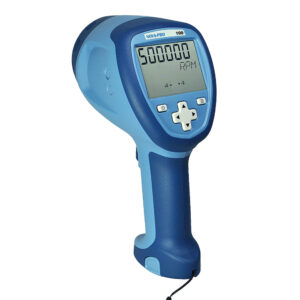
Nova-Pro® 100 Stroboscope and Tachometer
The Nova-Pro® 100 is a basic stroboscope that is a better choice when simplicity, speed, and reliability matter more than advanced features. It is ideal for quick diagnostics on motors, fans, pumps, conveyor belts, spot maintenance checks, and visual quality control.
Nova-Pro® 100 Key Benefits:
- Minimal learning curve
- Long-lasting LEDs
- Less misconfiguration
- Optional Laser Module allows for noncontact tachometer feature
- Economical price point
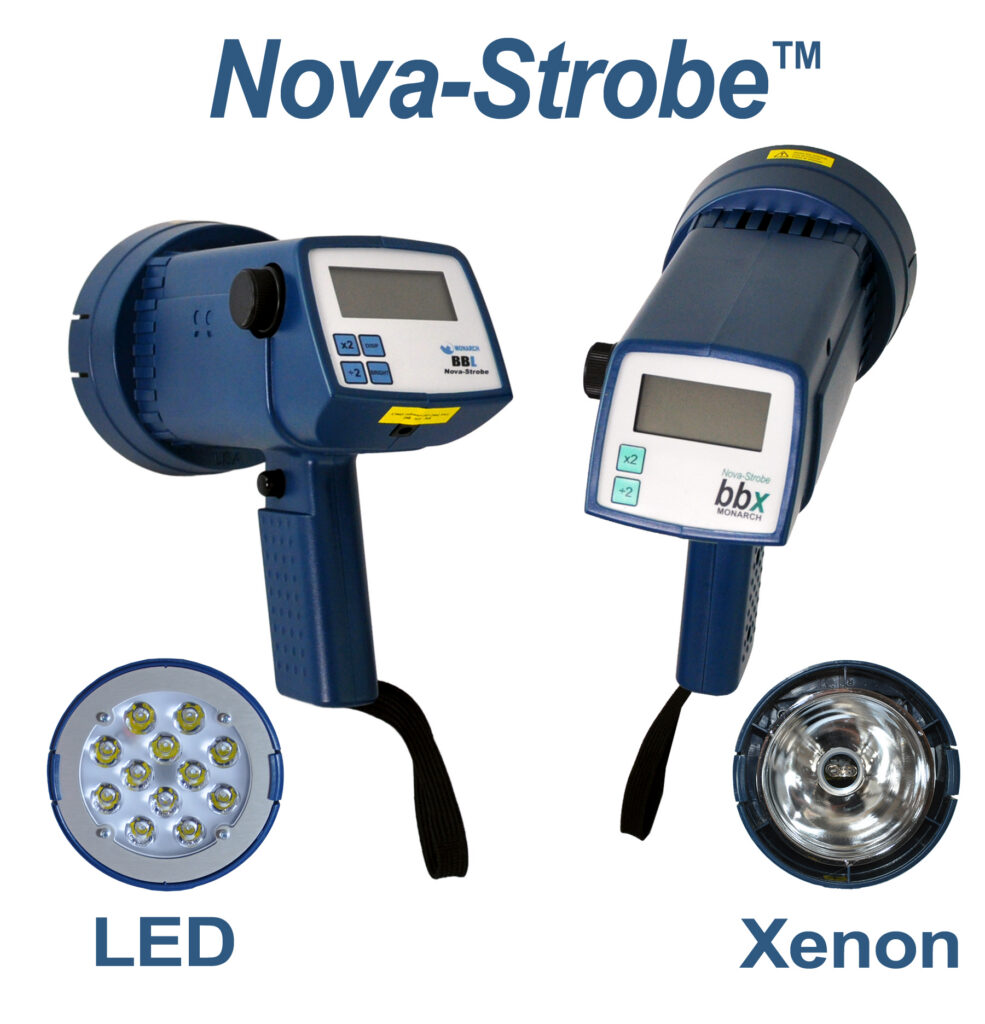
Nova-Strobe™ bbx and BBL
The Nova-Strobe™ bbx – basic xenon battery-powered
The Nova-Strobe™ BBL – basic battery-powered LED
Rotating Components: Checking fan blades, motors, shafts, gears, and rollers for defects.
Power Transmission: Inspecting webs, belts, sheaves, chains, and sprockets for slippage or wear.
Diagnostics: Identifying alignment issues and bent blades or shafts.
Specialized Industries: Performing stop-action inspections for textiles and printing press operations.
Non-contact RPM measurement
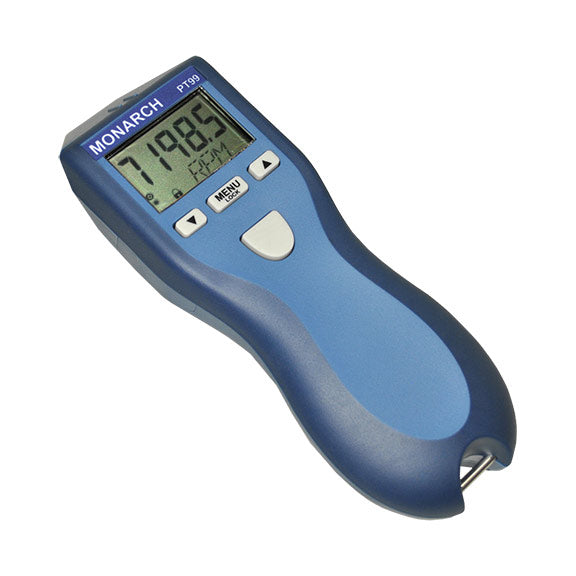
Pocket Tachometer 99 (PT99)
Noncontact rotational speed measurements in industrial environments, particularly for predictive maintenance on machinery like motors, fans, and gears. The PT99 is ideal for predictive maintenance and performance testing of high-speed machinery.
HVAC Systems: Useful for HVAC technicians monitoring fans and blower speeds.
Rotating Components: Ideal for measuring the speed of shafts, centrifuges, couplings, and gearboxes.
Conveyor Systems: Often used to monitor conveyor belt speeds in industrial settings.
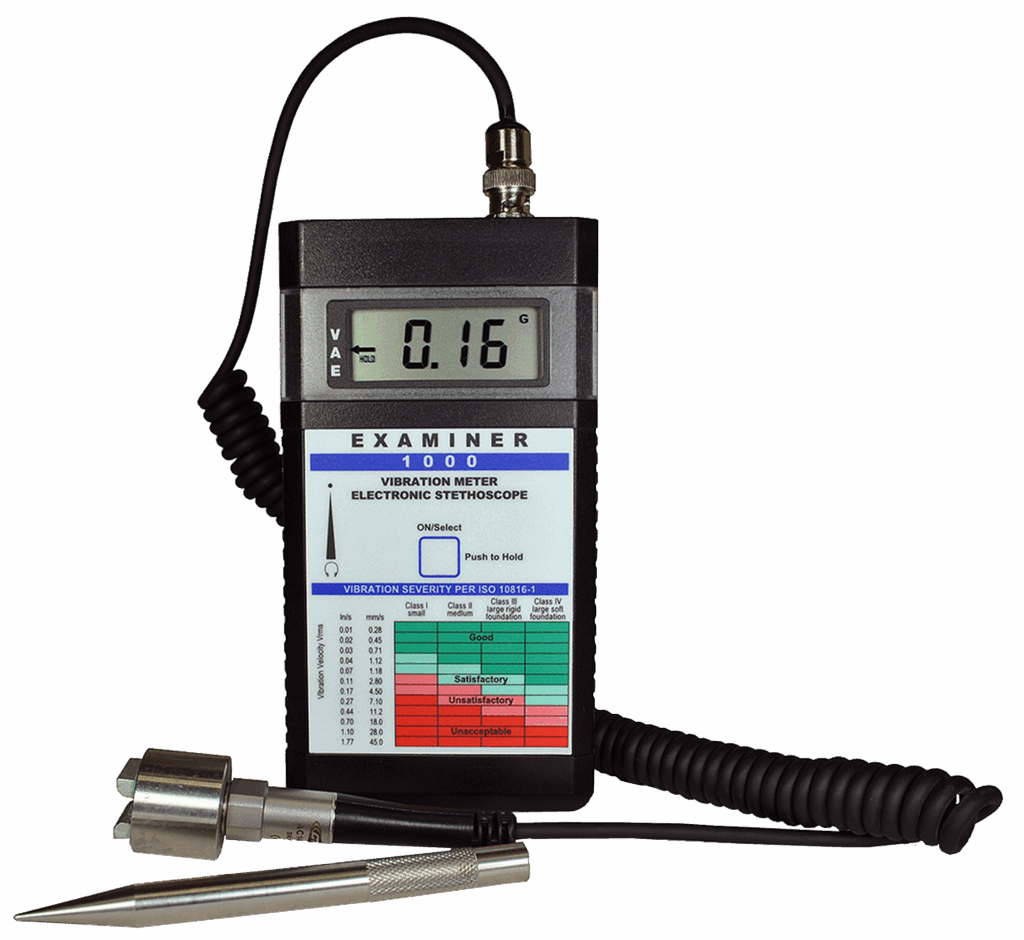
EXAMINER 1000 Vibration Meter
Dual-purpose tool, functioning as both a digital vibration meter and an electronic stethoscope to help “hear what you can’t see” on a display. The EXAMINER 1000 is ideal for early detection of machinery malfunctions and cost-effective predictive maintenance programs.
Common Applications: It is highly effective for monitoring AC/DC motors, gearboxes, pumps, compressors, and fans.
Critical Fault Detection: It is ideal for judging dynamic conditions such as machine balance, bearing defects, and lubrication issues.
Early Flaw Detection: Using the acceleration enveloping method, the device detects microscopic cracks or breakdown in lubrication at an early stage by measuring high-frequency impacts.


